



In diesem ArtikelAntippen und direkt zum Abschnitt springen
As of November 19, 2026. This guide walks you through how to assess the value of your Pokémon cards and the safest ways to sell them.
In short: The value of a Pokémon card depends primarily on four things: Rarity, Condition, edition, and Language. First check the set and card number, then the Condition, and then compare actual sale prices rather than asking prices. For quick and secure sales, selling to a dealer is worthwhile; for individual, very valuable cards, Grading and a private sale may bring in more.
Step 1: Identify the card precisely
Before you think about prices, you need to know exactly which card you have. The same Pokémon character often comes in dozens of versions, and the price difference can be enormous. You need the following information:
- Set symbol at the bottom of the card, indicating which expansion it comes from.
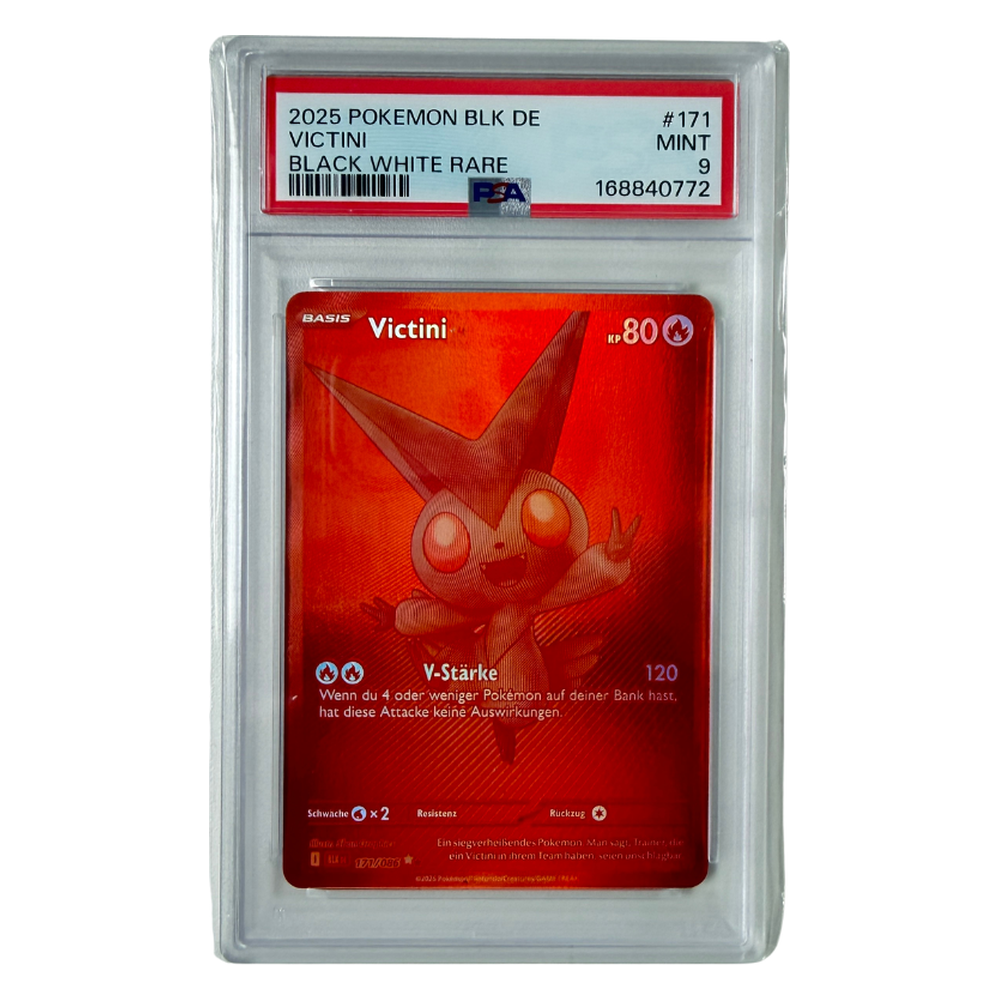
- Card number, for example, 171/086. If the first number is higher than the second, it is a so-called Secret Rare outside the regular set list.
- Variant: regular, Holo, Reverse Holo, or Full Art.
- Card Language.
- Special features such as a “1st Edition” stamp, Promo marking, or Prerelease stamp.
The manufacturer's official card galleries can help you identify the card. You can access them through the official Pokémon Trading Card Game website.
Step 2: Identify Rarity by the symbol
You can find the rarity symbol at the bottom of the card, on modern cards at the bottom left next to the card number. According to The Pokémon Company, the following applies to current sets:
| Symbol | Rarity | Classification |
|---|---|---|
| black circle | Common (Common) | usually worth only a few cents |
| black diamond | Not very common (Uncommon) | usually worth only a few cents |
| one black star | Rare (Rare) | usually low individual value |
| two black stars | Double Rare (Double Rare), e.g. many Pokémon ex | often low value, more for sought-after Pokémon |
| two silver stars | Ultra Rare, e.g. Full Art cards | significantly more, depending on the card |
| one gold star | Illustration Rare | sought after for popular Pokémon |
| two gold stars | Special Illustration Rare | often the most valuable cards in a set |
| three gold stars | Hyper Rare (gold cards) | usually high value |
This is a rough guide. The actual Price depends greatly on which Pokémon is pictured and how sought after the set is. A Charizard or Pikachu is usually worth more in the same Rarity than a less well-known Pokémon. Older cards use different symbols and rarity levels. For an overview of particularly sought-after cards, see our Top 10 Most Valuable Pokémon Cards.
Step 3: Assess Condition honestly
Condition often determines the Price more than anything else. Examine the card in good light, ideally with a lamp held at an angle. Check the corners, edges, surface (scratches, imprints, dents) and border centering.
| Condition | What this means |
|---|---|
| Mint / Near Mint | Like fresh out of the Booster, with at most tiny marks |
| Excellent | Light signs of wear, e.g. minimally whitened edges |
| Good | Obvious wear on corners and edges, light scratches |
| Played | Heavily played, with visible creases or wear |
| Poor / damaged | Creases, water damage, tears, usually only low value |
It’s better to be a little stricter when assessing a card. Many sellers think their cards are in better condition than they really are, which can lead to disappointment later when buying or selling.
Step 4: Consider Edition, Language and Grading
Edition
In the first sets from around 1999 to 2002, some cards have a “1st Edition” stamp. This first print run is much more sought-after by collectors than the later unlimited print run. So, when checking old cards, always look to see whether there’s such a stamp on the left below the image.
Language
English cards have the largest international market, while Japanese cards are highly sought after for certain illustrations. German cards often fetch slightly lower prices for modern sets. Learn more in our guide: Pokémon cards in Japanese, English or German.
Grading
During Grading, a company such as PSA, BGS or CGC evaluates a card's Condition and assigns it a grade, then seals it in a Sealed Case. A high grade can significantly increase the value of a sought-after card, while an average grade may have little impact. Grading costs money and often takes weeks, so it's usually only worthwhile for valuable cards in excellent Condition. Our article What are graded cards? explains what it's all about.
 Victini #171/086 (Black Bolt) - PSA 9 MintView product →
 Mega Lucario ex #179/132 (Mega Evolution) - M3 Grading 9.5 Mint+View product →
 cardcosmos - 3" x 4" Premium Top Loader 35PT | 25 pcsView product →
 Ultra PRO Vintage ONE-TOUCH Magnetic Card Holder 35ptView product →
Step 5: Research realistic prices
Use prices at which cards have actually sold as a guide, not the highest listings on sales platforms. Many listings stay online for months at unrealistic prices. Also compare only cards in the same Language, variant, and Condition. For very expensive cards, it’s worth getting a second opinion, for example from a specialist dealer.
Keep in mind: A dealer pays less when buying your card than its eventual sale price. They have to inspect and store the card, list it for sale, and take on the risk that it may sit unsold for a long time or lose value. This isn’t a sign of a rip-off; it’s standard practice for any reputable dealer.
Step 6: Choose the right way to sell
| Sales method | Advantages | Disadvantages |
|---|---|---|
| Selling to a dealer | fast, safe, also for entire collections | lower than the eventual sale price |
| Online marketplace | often the highest return for individual cards | fees, shipping risk, effort, attempted scams |
| Classifieds | no or low fees | negotiations, shipping and payment risks |
| Trading at events | direct contact, cards can be inspected in person | more for trading than for money |
For individual high-value cards, the effort of selling privately may be worthwhile. For larger collections, bulk cards, or if you want to sell quickly and without risk, selling to a dealer is usually the easier option. You can find a detailed comparison of the different ways to sell in Where can I sell Pokémon Sell cards?.
Sell cards to cardcosmos
We buy Pokémon cards, from individual cards and graded cards to entire collections and sealed products. Ideally, send us photos of the front and back or a list with the set, card number, Language, and Condition. You can find all the details about the process on our We buy your cards page. For graded cards, there’s also this article: Graded Cards: Buying and selling at cardcosmos.
How to prepare your cards for sale
- Put valuable cards in a sleeve and a Toploader before shipping or bringing them in.
- Sort cards by set or value to save time during evaluation.
- Take photos in daylight without flash, of both the front and back.
- Don’t clean, polish, or press cards, as this can lower their value.
Our guide explains which sleeves and Toploaders fit: How to store Trading cards.
Read more
- What are graded cards? Graded cards explained
- How to spot fake Pokémon cards: 8 features
- Where can I Pokémon Sell cards?
Frequently asked questions
How can I find out how much my Pokémon card is worth?
Identify the set, card number, Language, and variant, honestly assess the Condition, then compare actual sale prices for that exact version.
Which Pokémon cards are valuable?
Usually cards with high Rarity, such as Special Product Illustration Rares or Hyper Rares, popular Pokémon like Charizard or Pikachu, 1st Edition vintage cards, and cards in excellent Condition.
Is it worth getting my card graded?
Usually only for valuable, in-demand cards in excellent Condition. For inexpensive cards, the costs often exceed any potential added value.
Are cards without Holo worthless?
Individual common cards are usually worth very little. However, retailers often buy them in bulk, and non-holo cards from 1st Edition vintage sets can also be sought after.
Does cardcosmos also buy entire collections?
Yes. On our “We buy your cards” page, you’ll find all the information about the process and how to offer us your Collection.

















Leave a comment
This site is protected by hCaptcha and the hCaptcha Privacy Policy and Terms of Service apply.